Category: Child Growth, Nutrition & Development

  • What to Expect After Pediatric Surgery

    What to Expect After Pediatric Surgery

    Blogs

    Trending Topics

    What to Expect After Pediatric Surgery

    After pediatric surgery, parents usually have many questions about recovery, eating, activity, pain, and follow-up care. The recovery process depends on the type of surgery, the child’s age, and the child’s overall condition.

    Some children may recover quickly, while others may need a little more time and support. It is normal for the child to need rest after surgery, and parents should follow the discharge instructions carefully.

    The doctor may give instructions about medicines, wound care, bathing, diet, and activity. These instructions are important because they help support healing and reduce the chance of problems during recovery.

    Parents should also watch for warning signs such as fever, increased pain, vomiting, swelling, redness, discharge from the wound, or unusual behavior. If anything seems concerning, the doctor should be contacted without delay.

    Follow-up visits are an important part of recovery because they allow the doctor to check healing and answer any remaining questions. Even if the child seems better, follow-up should not be skipped unless the doctor advises otherwise.

    A calm home environment, proper rest, and careful attention to instructions can help the child recover more comfortably. If you are ever unsure about something after surgery, it is always better to ask the doctor for guidance.

    Explore More Blogs

  • How to Prepare Your Child for Surgery

    How to Prepare Your Child for Surgery

    Blogs

    Trending Topics

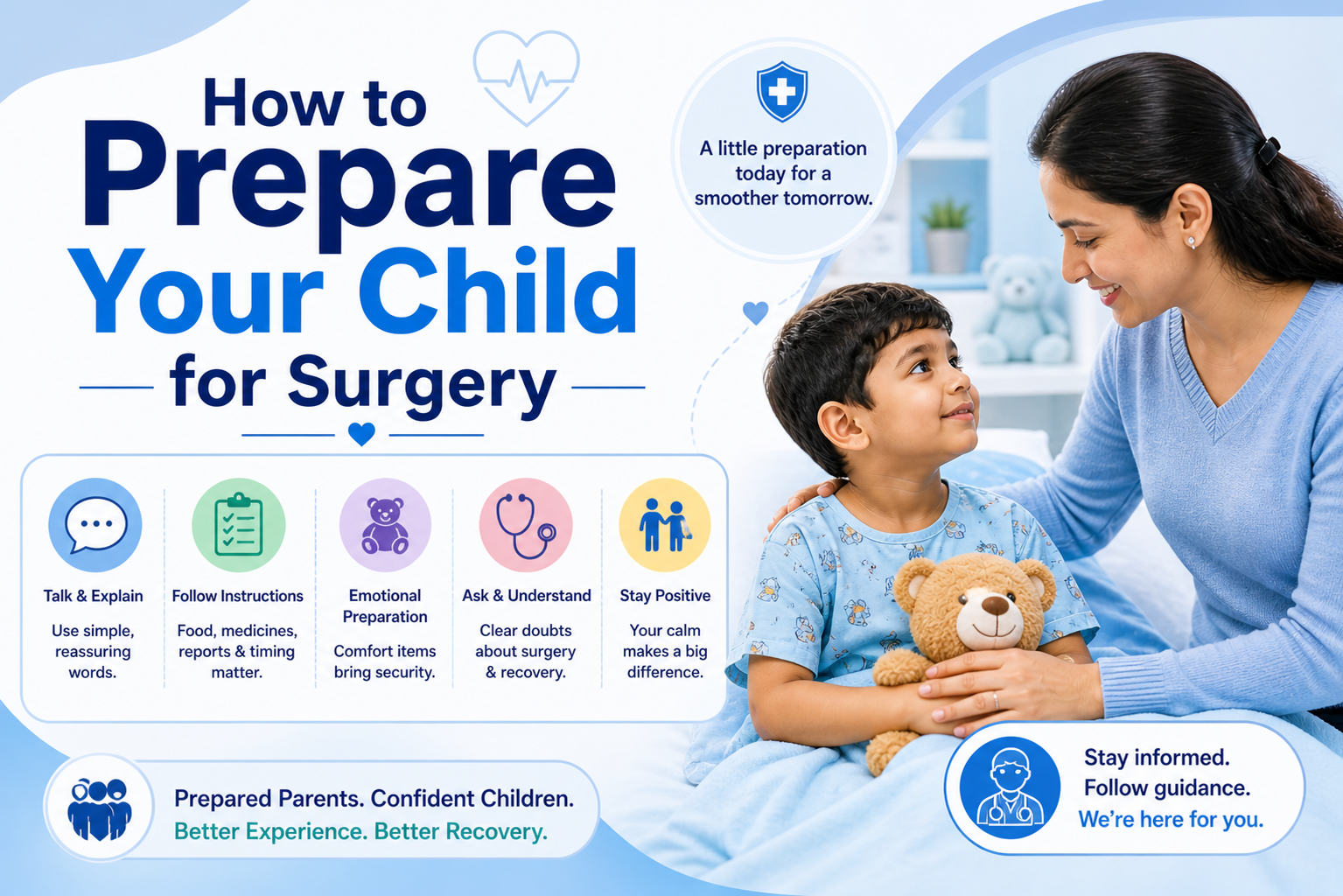
    How to Prepare Your Child for Surgery

    Preparing a child for surgery can feel stressful for parents, but a calm and organized approach can make the experience easier for the child and the family. Good preparation starts with clear communication and understanding the instructions given by the doctor.

    It is helpful to explain the situation to the child in simple and age-appropriate language. The message should be calm and reassuring, without creating unnecessary fear. Children usually feel more comfortable when parents remain steady and confident.

    Parents should follow the doctor’s instructions carefully regarding food, water, medicines, and reporting time before surgery. If any test reports, prescriptions, or hospital documents are required, they should be kept ready in advance.

    It is also useful to prepare the child emotionally. A familiar toy, blanket, or comfort item may help some children feel more secure. Older children may ask many questions, and honest but gentle answers usually work best.

    Before the procedure, parents should clarify doubts regarding the surgery, anesthesia, recovery, and follow-up care. Understanding the process in advance can reduce anxiety and help the family feel more prepared.

    Every child is different, and the preparation may vary depending on age, condition, and type of surgery. The most important part is to stay in touch with the doctor and follow the guidance given for your child.

    Explore More Blogs

  • What is Pediatric Laparoscopic Surgery?

    What is Pediatric Laparoscopic Surgery?

    Blogs

    Trending Topics

    What is Pediatric Laparoscopic Surgery?

    Pediatric laparoscopic surgery is a minimally invasive surgical approach used in selected children when appropriate. Instead of one large incision, this method usually uses small cuts and specialized instruments to perform the procedure.

    This type of surgery may offer certain benefits in suitable cases, such as smaller scars, less tissue injury, and faster recovery compared to some traditional surgical approaches. However, whether laparoscopic surgery is suitable depends entirely on the child’s condition and the doctor’s evaluation.

    Not every child or every condition is suitable for laparoscopy. The decision depends on the type of problem, the child’s age, the medical findings, and the safest surgical plan. A pediatric surgeon will explain whether this option is appropriate and what the expected outcome may be.

    Parents often like to know whether the procedure is safe, how long recovery may take, and what care will be needed afterward. These are important questions, and they should always be discussed during consultation before surgery is planned.

    Pediatric laparoscopic surgery is commonly considered when the doctor feels it is the right choice for the child’s condition. The focus is always on safe treatment, good results, and comfortable recovery.

    If your child has been advised laparoscopic surgery, a detailed consultation can help you understand the procedure and prepare properly for the next step.

    Explore More Blogs

  • What is a Pediatric Surgeon?

    What is a Pediatric Surgeon?

    Blogs

    Trending Topics

    What is a Pediatric Surgeon?

    A pediatric surgeon is a doctor who is specially trained to diagnose, evaluate, and treat surgical conditions in newborns, infants, children, and adolescents. This specialty focuses entirely on children, because their bodies, growth patterns, and medical needs are different from those of adults.

    Children are not simply small adults. They need age-specific surgical care, careful handling, and treatment planning that takes into account their growth, development, and overall health. A pediatric surgeon is trained to understand these differences and provide care that is suited specifically for young patients.

    A pediatric surgeon may be involved in the diagnosis of a condition, deciding whether surgery is needed, planning treatment, and guiding parents before and after the procedure. In many cases, consultation with a pediatric surgeon does not always mean immediate surgery. Sometimes the visit is important simply to understand the child’s condition and the best way forward.

    Pediatric surgeons may treat a variety of conditions, including congenital problems, abdominal surgical conditions, hernia, hydrocele, undescended testis, neonatal surgical concerns, and pediatric urological problems. They may also perform minimally invasive or laparoscopic procedures in selected cases.

    For parents, meeting a pediatric surgeon can feel stressful at first, especially when surgery is mentioned. However, the purpose of consultation is to understand the child’s condition clearly, ask questions, and receive proper guidance regarding the available treatment options.

    If your child has been advised pediatric surgical evaluation, early consultation can help in understanding the condition better and planning the right next steps in a timely way.


    Explore More Blogs